The Grain Receipt That Ran the Ancient World
The Egyptians built self-verifying financial infrastructure that lasted 1,600 years. Here's what it took, and what it takes now.
Every major institutional failure traces to the same design flaw: the system trusted when it should have verified. From Egyptian grain receipts to MiCA and the EU AI Act — the architecture that verifies has always existed.
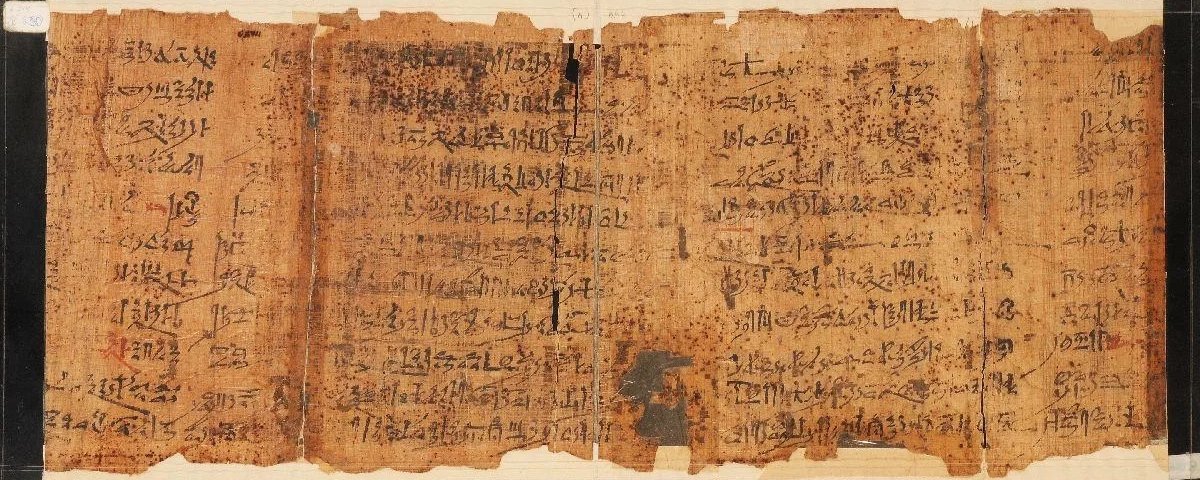
Every major institutional failure I can find — monetary collapse, communications breakdown, nuclear near-miss, compliance catastrophe — traces to the same design flaw: the system trusted when it should have verified. From Egyptian grain receipts to MiCA and the EU AI Act, the architecture that verifies has always existed.
The institutions that survived didn’t trust more. They verified better.
Curitiba, Brazil, sometime in the early 1990s. The city has overflowing garbage and no budget to fix it. Mayor Jaime Lerner puts metal bins at the edges of the favelas: bring a bag of garbage, get a bus token. Three years in, 100 schools had traded 200 tons of garbage for 1.9 million notebooks. Curitiba’s economy was growing 75% faster than the surrounding region. No World Bank loan. No redistribution scheme. Just a different architecture for exchange.
That story is 30 years old. The lesson it contains is 3,000 years old.
Every major institutional failure I can find, monetary collapse, communications breakdown, nuclear near-miss, compliance catastrophe, traces to the same design flaw: the system trusted when it should have verified. The Egyptian grain receipt solved this for monetary exchange in 1600 BCE. ARPANET solved it for communications in 1969. The Mondragon Cooperative solved it for enterprise finance in 1956, inside a fascist dictatorship, without asking permission.
The question for 2026 is who builds the verification infrastructure for enterprise compliance before MiCA, the EU AI Act, DSCSA, and the Battery Regulation make the retrofit cost visible on your balance sheet.
1. The Man Who Spent Four Years on the Wrong Problem
Bernard Lietaer spent the 1980s building the ECU convergence mechanism that became the Euro. He ran currency trading operations. He advised central banks. By most measures, he was operating at the center of the global monetary system.
Then he spent four years trying to understand why that system produces the outcomes it produces, despite the intelligence, good intentions, and institutional sophistication of everyone operating within it.
His conclusion, published in Of Human Wealth in 2004: money is not neutral. It’s architecture. And architecture determines behavior — not because people choose to behave badly, but because the architecture makes certain behaviors structurally rational and others structurally irrational.
“Money is like an iron ring we put through our nose. It is now leading us wherever it wants. We just forgot that we are the ones who designed it.” — Bernard Lietaer
Lietaer described two poles of monetary design. Yang currencies: competitive, accumulation-friendly, interest-bearing, designed to reward hoarding. Yin currencies: cooperative, circulation-friendly, demurrage-charged, designed to make holding value costly. Neither is inherently superior. The problem is monopoly. A system running exclusively on Yang architecture produces Yang behavior at scale — not because of human nature, but because the architecture makes cooperation economically irrational.
This isn’t mysticism. It’s systems design.
The same principle applies to compliance infrastructure. An architecture built on assertion — “we comply” — produces assertion behavior. Auditors check the assertion. Legal teams document the assertion. The assertion gets filed. When it turns out to be wrong, the consequence is retrospective and expensive. An architecture built on verification produces different behavior entirely. Compliance isn’t reported. It’s proven. In real time. Before anyone asks.
Somewhere in the gap between those two architectures is the actual risk your organization is carrying right now.
2. The Grain Receipt That Ran the Ancient World
The Egyptian ostracon grain receipt was not a currency in the modern sense. It was an encoded compliance instrument.
A farmer deposited grain at a state storage facility. A scribe issued a clay tablet — the ostracon — timestamped, sealed with an official mark, recording the quantity and the terms. That tablet circulated as currency across the Nile Valley for 1,600 years.
Five properties made it work:
Timestamped at issuance. The deposit date was encoded in the medium. No separate record to reconcile.
Terms encoded in the instrument itself. No external contract required. The ostracon was the agreement.
Value declined automatically over time. Storage fees were built into the structure — a form of demurrage. Holding grain cost you money. Circulating it was the rational choice.
Tamper-evident authentication. The official seal. No single actor could alter the record without detection.
Self-verifying. No trust relationship required between counterparties. The architecture proved the transaction.
The result: the Egyptian economy fed the ancient world, ran the first documented foreign aid program (grain shipments to Athens in 445 BCE), granted women legal property rights unmatched in the West until the 19th century, and built infrastructure still standing 4,000 years later.
The same pattern appears in Central Medieval Europe between 1050 and 1290: demurrage-charged local currencies operating alongside Yang trade money produced the cathedral-building boom, the first European universities, and a period of broad prosperity that economic historians have called the First Renaissance.
In both cases, the architecture did what we now call a smart contract. The terms of the agreement were encoded in the medium. No trust required between parties. Compliance was structural, not asserted.
The Egyptian grain receipt didn’t need an audit. It was the audit.
3. Why the Fix Always Fails. And the One That Didn’t.
Bernard Lietaer’s proposed solution to the global monetary system’s structural dysfunction was the Terra TRC: a commodity-backed, demurrage-charged international trade currency, declining in value at roughly 3.5% per year. Backed by a basket of commodities including oil, copper, and wheat. Designed to circulate, not accumulate.
The logic was sound. The architecture was right. The Terra TRC never launched.
The reason is precise: no institutional bridge. The Terra required multinational corporations, sovereign governments, and the IMF to adopt a currency that existed outside every regulatory framework they operated within. Their auditors couldn’t sign off on it. Their regulators had no category for it. Their boards couldn’t approve it. The architecture was right. The on-ramp was missing.
The same failure mode appears consistently across every serious attempt at monetary reform.
LETS (Local Exchange Trading Systems) had the right architecture but couldn’t interface with tax systems or institutional finance. They stayed community-scale. The Argentinian Creditos scaled to six million users during the 2001 crisis, then collapsed when the state couldn’t integrate it. No regulatory framework meant no institutional staying power. Post-2017 DeFi governance tokens were technically sophisticated but institutionally inaccessible. Regulators increasingly view governance tokens as subject to the same securities laws as stocks, and users who believe governance tokens grant a right to receive profits are frequently wrong. The infrastructure worked. The compliance interface didn’t exist.
The pattern: every attempt to introduce verification architecture into an assertion-based system fails when it requires institutions to exit their existing accountability structures to participate.
Then there’s Mondragon.
The Basque Country, 1941. Franco’s dictatorship in full operation. A priest named José María Arizmendiarrieta founded a technical school in the town of Mondragón with community capital and no external funding. By the mid-1950s, five of his students had built a paraffin heater cooperative with 24,000 pesetas of neighborhood investment. By the 1980s, Mondragon comprised over 100 cooperative enterprises employing more than 18,000 people, and had outlasted the dictatorship that tried to suppress it.
Thomas Greco, writing on the Mondragon experience, identified the critical variable: success was replicable, but only when built on shared accountability structures — not parallel ones. Mondragon didn’t ask Franco’s government for permission to build a different economy. It built inside the rules the government enforced. It paid taxes. It operated in pesetas. It worked within Spanish banking law.
The cooperative architecture was the new layer. The institutional framework was the container that made adoption possible. That’s not compromise. That’s architecture.
And the SEC has confirmed this logic repeatedly, across no-action letters covering industries as different as residential water companies, audiology practices, and sugarbeet processors. The consistent finding: cooperative memberships are not securities. Members participate, they don’t speculate. Governance rights derive from patronage, not capital. The compliance is structural, built into how the ownership model works, not layered on afterward.
Meanwhile, governance tokens — the web3 equivalent of the Terra TRC — are under active SEC scrutiny as unregistered securities. Right architecture. Wrong institutional interface. Same failure mode, different decade.
4. Baran’s Fish Net and the Near-Miss That Should Have Ended Everything
Paul Baran wasn’t a visionary. He was an engineer solving a specific problem: the U.S. communications infrastructure was a centralized star topology — a handful of switching nodes that, if destroyed, would silence the entire network. In 1964, he published his distributed mesh proposal for RAND Corporation. Not because it was elegant. Because the existing architecture had a fatal flaw: it trusted nodes designed to be targeted.
On September 26, 1983, Soviet Lieutenant Colonel Stanislav Petrov received an alert from the Oko early-warning satellite system: five U.S. Minuteman missiles inbound. The system had triggered. Protocol required him to report an attack.
He didn’t report it. He classified it as a system malfunction — a judgment call made in minutes, without corroboration, based on the absence of cross-referencing data. He was right. The system had misread sunlight reflecting off clouds.
Baran’s problem and Petrov’s near-catastrophe were the same problem: a system that trusted a single data stream when the stakes required verification across multiple independent sources. One architectural flaw. Different domains. Same potential consequence.
The principle connecting Egyptian grain receipts, Mondragon, ARPANET, and Petrov’s 1983 near-miss is not technology. It’s this:
Every major civilizational failure — monetary collapse, communications breakdown, nuclear near-miss, compliance catastrophe — traces to the same design flaw. The system trusted when it should have verified.
The Egyptian grain receipt solved this for monetary exchange. ARPANET solved it for communications. The cooperative structure — with the SEC’s own no-action letters as the paper trail — solved it for enterprise ownership. The question for 2026 is who solves it for enterprise compliance infrastructure, and whether they do it before or after the audit.
5. The Compliance Deadlines Are the Forcing Function Baran Never Had
Baran had the right architecture in 1964. It took a Defense Department contract and a decade to implement it. The forcing function was the Cold War.
Lietaer had the right architecture in 2004. He never found a forcing function. The Terra TRC stayed in academic papers.
The forcing function has arrived. Not from nuclear threat. From regulatory mandate.
| Regulation | Deadline | Core Requirement |
|---|---|---|
| MiCA | July 2026 | Digital asset compliance infrastructure, CASP licensing |
| EU AI Act (high-risk) | August 2026 | Verifiable AI governance, decision logging |
| DSCSA | November 2026 | Pharmaceutical supply chain traceability |
| EU Battery Regulation | February 2027 | Digital battery passports, full provenance |
| CSDDD | July 2028 | Corporate sustainability due diligence, audit trails |
Each regulation demands the same thing the Egyptian grain receipt provided: proof, not assertion. Verifiable, not reported. Structural, not retrospective.
The critical difference from every prior reform attempt: these regulations don’t require institutions to leave their existing frameworks behind. They require institutions to add verification to infrastructure they already operate. The accountability structures remain. The verification layer goes on top.
That’s the Mondragon move. That’s the ARPANET move. Work within the institutional container, build the new architecture inside it. The deadline, unlike the Terra TRC, is not optional.
6. Transactions That Prove Themselves
Don Shaffer, President of RSF Social Finance, once put the dysfunction of modern financial infrastructure precisely: transactions have become “complex, opaque, anonymous, based on short-term outcomes.” The shift required is the mirror image: direct, transparent, personal, built on long-term relationships.
That’s not a values statement. It’s a technical specification. Every compliance framework converging between now and 2028 is encoding it into law.
MiCA requires CASP licensees to maintain demonstrable, auditable capital reserve documentation — not quarterly reports, but real-time provable positions. The EU AI Act’s high-risk AI provisions require organizations to demonstrate, on demand, that every covered AI-driven decision followed its stated governance policy. DSCSA requires pharmaceutical supply chains to produce unit-level traceability data: not aggregate reports, but transaction-level proof.
This is where most compliance teams get stuck, by the way. They confuse “we have a policy” with “we can prove the policy was followed.” Those aren’t the same thing. One is an assertion. The other is architecture. I’ve watched companies spend 18 months on what should have been a 90-day implementation because they started with the wrong foundation — retrofitting verification onto systems that were designed, from the ground up, to assert.
The institutions that can’t make this shift face a specific problem: their existing compliance architecture was designed for assertion, not verification. Rebuilding it from scratch under regulatory deadline pressure is the most expensive version of this transition.
The cooperative ownership model draws a distinction that applies directly here: economic benefits flow based on the volume or value of a member’s participation in the business, not their capital contribution. Applied to compliance infrastructure, this maps precisely to what regulators are requiring. Participation is the proof. The architecture records and surfaces it automatically. No separate assertion layer required.
ISO 27001 and SOC 2 Type 2 aren’t obstacles to this architecture. They’re the institutional language that makes adoption possible — the same function that pesetas and Spanish banking law served for Mondragon. When verification infrastructure is certified to these standards, when the immutable audit trail and automated compliance reporting are wrapped in frameworks that boards can approve and insurers can underwrite, enterprises don’t face a choice between compliance and innovation.
Institutions don’t have to abandon what they’ve built to participate in what comes next. For the first time, the architecture makes both possible in the same system.
7. What the Grain Receipt Looks Like in 2026
The Egyptian ostracon had five properties. Each one maps directly to what enterprise compliance infrastructure must do now.
| Property | Egyptian Ostracon (1600 BCE) | Verification Architecture (2026) |
|---|---|---|
| Timestamped at issuance | Scribe-sealed at grain deposit | Immutable ledger timestamp on every transaction, no reconciliation required |
| Terms encoded in the instrument | No external contract required | Compliance requirements embedded in smart contracts; SOC 2, ISO 27001, ASU 2023-08 built into the protocol |
| Automatic value change | Demurrage built in — hoarding costs money | Real-time automated compliance monitoring; state changes trigger alerts, not quarterly reviews |
| Tamper-evident authentication | Official seal, alteration detectable | Cryptographic authentication; no single actor can alter the record |
| Self-verifying | No trust relationship required between parties | Audit trail proves itself before the auditor asks |
The difference between the ostracon and what’s now deployable: the grain receipt required a scribe, a storage facility, and a clay tablet. Modern verification infrastructure integrates with SAP, Oracle, and Workday. It deploys in days, not quarters.
That last part used to be the bottleneck. The Big 4 would quote you 6 to 12 months and $1M+ to stand up a production-grade permissioned blockchain network. ChainDeploy changes the math. Pick your use case — supply chain, payments, regulatory traceability — and the infrastructure provisions automatically with SOC 2 and ISO 27001 built in. Live in 24 hours. Currently in private beta with white-glove onboarding included for early access partners.
The ostracon didn’t need 12 months of consulting. The scribe had the right architecture and the right tools. That combination is available now.
The cooperative ownership model operates on the same principle at the ownership layer: non-transferable membership, participation-weighted governance, compliance-by-design. The verification architecture BlockSkunk deploys operates on the same principle at the infrastructure layer: every transaction timestamped, every governance decision logged, every audit trail cryptographically sealed.
The Egyptians built self-verifying financial infrastructure that sustained a civilization for 1,600 years. They didn’t have immutable ledgers. They had clay and a seal and the right architecture.
The architecture has always been the point.
The Bridge Always Mattered More Than the Architecture
The pattern across 3,000 years is consistent. Dynastic Egypt: Yin grain receipt alongside Yang gold — 1,600 years of broad prosperity and the ancient world’s most durable economic infrastructure. Central Medieval Europe: demurrage currency alongside Yang trade money — the cathedral-building boom, the first European universities, the First Renaissance. Mondragon: cooperative architecture inside Franco’s institutional framework — outlasted the dictatorship, scaled to billions in revenue, confirmed by the SEC’s own no-action letters as the compliance-native structure for participation-based ownership. ARPANET: distributed mesh running on existing telephone infrastructure — became the foundation of what is now a $110 trillion internet economy.
Every system that worked built a bridge between the new architecture and the institutions that had to adopt it. Every reform that failed — the Terra TRC, LETS, the Argentinian Creditos, DeFi governance tokens — didn’t.
I want to be honest about something: the history makes this look inevitable in retrospect. It wasn’t. Mondragon nearly collapsed twice in its first decade. ARPANET’s distributed mesh was dismissed by AT&T as unworkable. The Egyptian grain receipt probably had predecessors we’ve never heard of because they failed. What looks like a clean through-line is a selection effect. We remember the ones that worked.
The compliance mandates converging between now and 2028 are building the bridge whether enterprises are ready or not. MiCA doesn’t ask for your opinion on distributed ledger technology. The EU AI Act doesn’t offer a grace period for organizations that preferred assertion-based governance. DSCSA enforcement doesn’t pause while supply chain teams evaluate vendors.
One question worth sitting with: when your MiCA, EU AI Act, or DSCSA audit arrives, will your compliance infrastructure prove itself — or will it require a team with spreadsheets to assert it?
The Egyptians didn’t have auditors. They had architecture that made auditors unnecessary. That option is available now. The question is whether you build it before the deadline makes the decision for you.
The systems that sustain civilization — monetary, communications, compliance — all fail for the same reason: they trusted when they should have verified. The architecture that verifies has always existed. What’s always been missing is the bridge into institutions that can’t be bypassed. That bridge now has a deadline.
BlockSkunk maps that bridge through blockchain compliance infrastructure and production enterprise mBaaS .
Ready to build the verification layer before the mandate hits? Request early access to ChainDeploy and get your permissioned blockchain network live in 24 hours — with white-glove onboarding included during the private beta.
Or start with a 30-minute compliance architecture assessment at blockskunk.com/contact .
Sources: Bernard Lietaer & Stephen Belgin, Of Human Wealth (2004); Gregory Wendt, “Economics Built on Beauty and Community,” Triple Pundit (2009); Thomas H. Greco, Beyond Money; EU Regulation 2023/1114 (MiCA); EU AI Act (Regulation 2024/1689); U.S. Drug Supply Chain Security Act (DSCSA); EU Battery Regulation 2023/1542; EU Corporate Sustainability Due Diligence Directive (CSDDD); RAND Corporation, Paul Baran distributed communications papers (1964); SEC no-action letters: Tesoro Viejo Master Mutual Water Company (2018), Entheos Audiology (2014), American Crystal Sugar Company (2013).